Music Genres

Within music there are many different genres - unsurprisingly, due to the fact that many people listen to different things. Within there genres there are lots of sub-genres, some of which are shown below;
These sub genres allow a diverse range of a specific music type, consequently meaning why there is so much music out there. Furthermore, they create lots of different artists, for example, in Rock, you can have heavy metal bands, and indie rock bands - both are rock, but sound extremely different.


What will I choose?

I have yet to decide what music genre I would like my magazine to be based around. I listen to lots of different types of music, but will probably choose Indie rock or Alternative, this is because it is what I am interested in and listen to the most. 

Ideology

Music is full of genres, each represented differently, therefore each genre has its own ideology - their own set of beliefs.
There is a big dichotomy between pop and rock, and therefore it affects the representation of them.

Pop: Conformity 

This genre often conforms to what is seen as socially acceptable.

  • Clean cut image - this is one of the key factors to the success of the artist, a typical example of this would be a boy band - they are purposefully meant to look perfect, as their music is predominately aimed at teenage girls. 
  • Songs about love - due to their target audience, pop artists songs are usually asexual and are non threatening - they are free of expletives. 
  • Perform in a conventional way - typical song structures, consequently meaning why lots of pop music often sounds similar.
  • Ability to play live - this is less important for the pop genre as it is to the rock, as many music today is edited in studios.
  • Conforms to norms - pop music generally sticks to a certain structure, again, a typical example of this is that all girl or boy bands follow are certain formula.
  • Manufactured - this means that the music is made to sell to thousands, resulting in much of it being created by others.
  • Kids - the audience is mainly for the younger generation
  • Seen as ephemeral - this is the attitude of 'here today, gone tomorrow' which is typical of most music because it tends not to last over decades. 

Rock: Rebellion 

This genre is seen as rebellious and wild, and often goes against what is seen as socially acceptable. 
  • Dirty/untidy - this often gives the impression that it is less important, rather than like pop bands, rock bands have a 'don't care' attitude.
  • Songs about sex - the music is largely about subjects like sex, drugs, anger, this consequently largely differs to pop, so the music is predominately aimed at the older generation. 
  • Loud - the genre is abrasive and sometimes deliberately offensive to mainstream music, an example is the sub - genre 'screamo'.
  • Ability to play live - more important than pop, rock bands end o play gigs and concerts, their music is less edited and more authentic.
  • Non - conformist - the music is often deemed socially unacceptable with large amounts of suggestive themes and artists are associated with illegal substance abuse.
  • Classic - it is seen as 'meant to last'  the music often survives, a example of this would be that the Rolling Stones are referred to as classic. 
  • Adults - the audience is mainly for the older generation, as a result from sex, drugs and anger 


Although theses genres are largely different, it is becoming increasingly apparent that these two are beginning to bleed together. This is shown by the fact that now, the clean cut image of pop artist are now breaking out from the perfect image and beginning to cover themselves in tattoos, break the law, and more recently, getting arrested (Bieber). 

Preliminary Production

Student Speil


For our Preliminary Production, we were tasked with creating a magazine cover for a school magazine. To the right is my magazine cover - "Student Speil" - it was designed with the idea 'for the student, by the student' in mind, meaning everything on the cover only applies to students.  Before I began this task I had already evaluated a magazine - VOGUE - so I knew what to include and used it loosely as an inspiration.  

Masthead

The title of the magazine is bold - this allows it to stand out against the bright and busy background. I used a clear handwriting font that would not sink into the background, but is also creative, so it fits in with the colourful theme. The colour is the same as the rest of the text on the cover - I used this mainly because it would stand out, but also because it makes the cover look clean and professional. 

Colour Scheme 

The overall theme is quite colourful - this is due to the artwork that I placed the student in front of - but the main colour used is black. I chose this particular artwork because I wanted it to be bright and bold so it would attract the age of the viewing audience - the younger generation. I used the black so it would be clear, but the colour also corresponds with the clothes of the student. However, with the busy background, it did create a problem as to what would be practical, meaning there was little choice in what I used. Lastly, had there been other issues, the house style of the magazine would have been consistent, with the masthead always the same - this would mean it would become recognisable and familiar. 

Image

I chose the student - Kim - as model for the cover, after a large amount of convincing and some slightly awkward moments of asking her to change how she stood in front of the artwork in the school gallery, I had created a few options. This allowed me to play around and I eventually came up with the image in to the right. When editing, I placed 2 layers on top of the original photo,  but centred it towards the bottom right hand corner to change the position of where Kim was. This is the rule of thirds - meaning that the eye is naturally drawn to the right hand corner, which attracts the reader. 


Furthermore, by having her in a corner, it creates more space that I was able to use to add text. This meant that the picture was not spoiled and the text could be more structured. The text also has a consistent margin, so it is clearer and easier to read as it is all aligned. 

Function 

The function of the magazine is to be a school magazine. I have designed mine with the idea of students in mind. This then created the idea 'Student Speil' - due to the fact that it is the students point of view, so it is their own 'speil'. The front cover shows what will be inside the magazine, and is all related to a student. This is consequently why I chose to put a student on the front. 


Contents 

To the right is my contents page, which was the other task that we had to do for our Preliminary. It is a similar picture to the cover, but Kim is stood to the side, which keeps a certain house style.

Masthead

I have largely based my contents page on the cover, as all the text and font is the same. This means that it is bold and clear - which is also consistent with the cover.

Colour Scheme

Similar to the cover, the back ground is the same, therefore the colour scheme is too. This again keeps the consistency and links with the colour of the top that is on the student. The same problems arose with the background as when I created the cover, this also adds to the  reason why the fonts and colours are the same. Also, for the image, I chose it because she is angled in a different way, therefore it creates the effect that when the reader turns the page, the students body changes. 


Content

The content of the magazine relates to what is on the cover - this means that some of the things that I mentioned on the cover had to correspond with what went on the contents, otherwise it wouldn't have made any sense. Furthermore, the actual suggested articles all relate to a student and what would be helpful for them - this was obviously needed seeming as the magazine is a school was and is predominately aimed at students. 


The Four Fs

What are they?

The 'Four Fs' are the holy grail of designing a magazine. They are the rules to live by for any editor. Each one is vital to create the most aesthetical pleasing and interesting magazine.  

Frame

The frame is the standard for outer page margins and gutters. Some magazine chooses to use this for the house style, and keep it them consistent from issue to issue. The can however vary, using different sizing and width.
This is demonstrated below by the fact that all the test is aligned and equally spaced.

Format

This means the design choices that are seen every issue and make a magazine's overall look. This means that there is a certain house style for each magazine and the key areas include;  the logo, cover lines, size of the magazine and department headers.
This is perfectly shown below by the fact that the masthead is consistent in every issue of GQ, it does not move, similarly, neither does the cover line that is located beneath it. Furthermore, the colour scheme is clearly red/white/blue, this could connote that because the actor, Ryan Gosling, is American. It also highlights the clarity of his blues eyes. 

Function

This is what the magazine is trying to achieve - essentially the message that it is aiming to spread.
In GQ, this issue is the 'Back To Business Issue' - which therefore means that the entire magazine is focusing on business related topics. It also relates to the image on the front, here it is Ryan Gosling, meaning the magazine is aiming to spread the article on him.

Formula

This is what is inside the magazine, and is technically described as the magazines editorial content. This includes; its feature type and length, departments in the front and back of the magazine, photographic style, and illustrations.
Below, the formula is demonstrated by the fact that the magazine features Ryan Gosling, so therefore it also shows an image of him.


Research Methods

What are they?

Research methods are different types of ways of finding out information - there are lots of different ways to find things out, and they all come under 4 different categories.


Primary Research 

Also called field research, primary research is the collection of data that does not already exist, for example - creating a questionnaire and distributing it is a form of primary research because it is has been made and carried out by the same person. 


Examples;


  • Email - an email is a direct way of collecting data, it is fast and easy to use, but the message can be lost and internet can be unreliable. 
  • Survey - a survey will allow the investigator to collect data on a specific subject, it is quick and straight forward, however it can not always be reliable.
  • Phone call - a phone call is a way of collecting data by phone, it is quick, simple and easy, however, reception is not always possible and phones can lose battery life

How can I use it? 

I can use primary research as a way to find out information what is best for my magazine, for example; I could create a survey on the best colour scheme to use or a focus group to help me decide on what people want to read in a music magazine in order to help me make it more appealing to the readers. 


Secondary Research 

Secondary research is a type of research that is someone else's findings. This means it was not created by you, however you have used it to collect data or add to data.


Examples;

  • Search engines - this is like Google or Bing - you can search for data that you have not made, it is quick and easy, however it can crash and some websites may not work.
  • Individual websites - these are websites made by others, for example - a blog. They are to the point and are often personal, however this means that the views will be biased as they are the owners and as a result can be unreliable.
  • Books - these are good as they are reliable and last a long time, however books have a tendency to go outdated, therefore information and data can be wrong.


How can I use it?

I can use it to research design ideas. This means that I can use search engines to find out information on the way magazines are designed and how to construct them. Furthermore, I could buy some magazines and look at the layout of them to help decide which is the best for what I want and use them to give me ideas on what to put in my music magazine.

Quantitative Research

This research is for numerical data, it helps to identify patterns and trends in what has been researched, for example - looks at the trends in a questionnaire.


Examples;

  • Survey/Focus group - this means that you can ask a certain question to a group of people and then analyse the data numerically to create graphs or charts. These are good because they can identify the trends and patterns, however only work best when a larger amount of data has been collected.


How can I use it?


This type of research will be useful because  I could ask a focus group to do a survey, such as asking them what music they like and then listing genres. I could then compile a graph to show which music is the most popular and then advertise and include it in my magazine, which would make it more appealing.


Qualitative Research

Qualitative research is used to identify the quality of the exploratory research. This means that it is used to gain an understanding.


Examples;

  • Interviews - this means that by interviewing numbers of people, you are gaining an insight into a topic - e.g by asking about pizza, could draw the conclusion of key points like too much cheese, cooking times and sauce ratio. These are good because they give information on the subject, however can be unstructured and confusing.


How can I use it?

I would prefer not to use this type of research method as much as the rest - this is due to the fact that I can draw conclusions from focus groups using other methods which makes more sense for what I need it for. However, it may be able to create more detailed conclusions rather than simple surveys, so this would be helpful as for focus groups as it would be easier rather than needing to interview singularly. This means that I would use it to identify the general quality of the research I collect.

Features of a Magazine Cover

Masthead

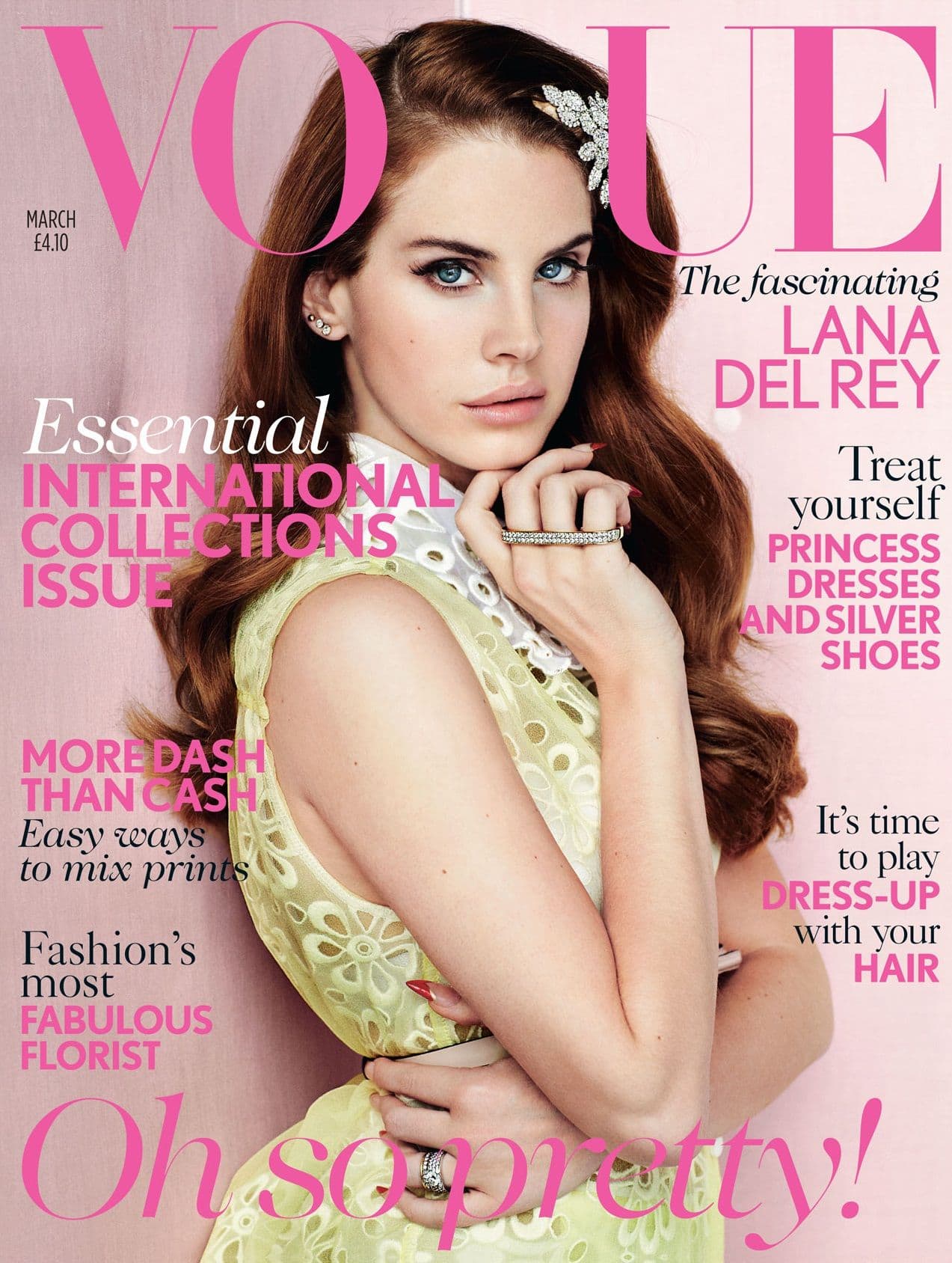
The name of the magazine is large and bold, in a serif font, immediately drawing the eyes attention. Furthermore the masthead is part of the house style as it is consistent with every issue.  The visual style of the magazine is aesthetically pleasing and compliments the celebrity photo. It is clear that a particular colour scheme has been used - pink - and it therefore creates the feel that it is predominately aimed at women. The use of words on the cover such as ‘princess’ and ‘pretty’ also re-enforces this. Furthermore, due to only 3 different types of texts makes it clear and not too overwhelming. By only making some of the text bold or italic, it highlights certain words first, for example, 'Essential'  leads the reader to view the magazine as having information that they desperately need. Also, it grips them to look at the whole cover, tempting them to buy it in order to read it all.


Colour Scheme


The overall theme of the cover is pink, with added texts of black and white. This creates a "pretty" look, that matches the look of the celebrity - Lana Del Ray - because she is wearing a flower dress and flower head piece. Furthermore, the yellow dress compliments the light pink back ground and her auburn hair contrasts it so that it stands out. Lastly, the darker pink colours of the text also stand out against the light pink to give a playful and light feel.


Main Image

The main image is known to be the largest in the magazine. It is bold and the model celebrity is angled perfectly to attract the most attention. For example, Lana is looking straight, although her body is angled differently - this has been done so it appears that she is looking into the readers eyes, compelling them to make a purchase.


Text 

The text has been placed around the image, almost in the way her body is, to leave the majority of her uncovered, therefore making the image stand out more. The margins of the cover are all the same, giving a professional and clean look. Furthermore, the alignment of the text has been edited according to which side it sits on, which also makes it look cleaner and easier to read - far more effective. The left third of the magazine cover displays articles inside that will be easy to show when in shops, it also holds the 'VO' of the masthead that is instantly recognisable as the serif logo for Vogue.


Function

The content of the magazine is targeted to a specific audience - predominately women. This is shown by the use of words and what articles are inside. For example; 'It's time to play dress up with your hair' - consequently it highlights an article that women may be interested in, resulting in a higher chance of buying the magazine. The cover also credits Lana Del Ray, indicating that there is also an article on her - this is a selling point in itself because fans of the singer will want to buy it.


Dateline

The month of the issue has been included on the cover in small text - important for shops to check if its up to date and for any who collect the magazines. The price of the magazine has also been included below the month - the small print is used so it does not to detract from the main featured of the cover, but is mentioned as it is important for the customer or reader.  


History of Music Magazines


Where it all began?

The American music magazine Billboard, now owned by Prometheus Global Media, was the first published on November 1st 1894. It did not become well known until 1936 when sales began to rise. 
Billboard is the oldest trade magazine in the world.

The UK 
Music magazines were very popular in the UK - NME (New Music Express) leading sales since its first issue in 1952.

Where are we now? 

Unfortunately, with the rise of the internet, music magazines are becoming less popular, and in 2001, NME circulation fell due to this.


History of Music Magazines 

1894: Billboard (became well know in 1936)

This magazine was probably one of the most well known music magazines since it was first published. However, its first issues were not made to be about music, but rather to be for the interest of advertisers, poster printers, bill posters and advertising agents. Over the years it has developed into the popular glossy magazine it is now.  


1926: Melody Maker
This particular magazine was first created for the classical and jazz genre. It was originally for musicians, but as the popularity increased, it began to alter its content to fit with the more recent music. Further development came when it changed from its original newspaper format to its glossy design now.

1952: NME (New Music Express)
NME is perhaps the most successful magazine in the UK since its publish in 1952. Similar to Melody Maker and Billboard - its format was like a newspaper and its content focused on what was developing at the time.

1926: Rolling Stone 
This magazine was the first music magazine to identify the culture in music. It looked at issues surrounding music, like the politics of it and began to focus on music from more of a social side, meaning that it was perhaps less informative, but more creative and relevant in comparison to its competitors  beforehand.

1978: Smash Hits
Following from 'Rolling Stone', this magazine was now looking at the more relevant music ideas and was aimed predominately at teens. It had sections like the lyrics to the latest songs in the charts - creating the new idea of magazines specifically designed for ages and focusing on one particular genre.

1981: Kerrang!
This is one of the most well known alternative or rock magazines to date. It has a specific design and function, following the path of 'Smash Hits' and includes things that are aimed more at the younger generation.